
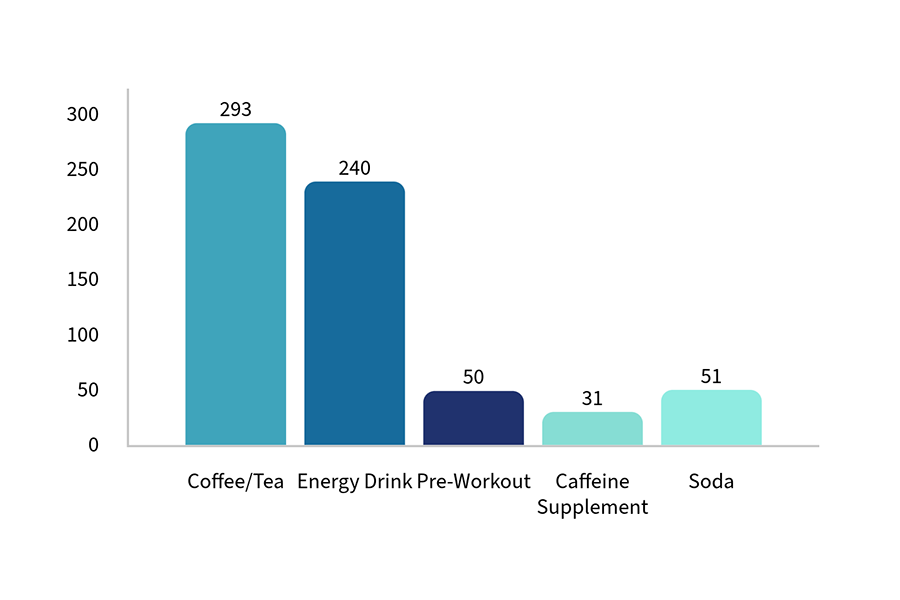
Inarguably, much of the world runs on caffeine. In 2013, a study in “Food and Chemical Toxicology” found that the mean daily dose of caffeine among Americans of all ages is 165mg per day. While caffeine is widely used, the form of consumption can vary per person. The 2020s brought with it an increased usage of energy drinks as a source of caffeine, particularly among young people. While many WAHS students rely on their energy drinks, there are members of the school community who are far from enthusiastic about the trend.
“The concern about caffeine use in teens can be broken down into two buckets,” said Dr. Kate DeGeorge, a health provider and associate professor of family medicine at UVA. “One: the actual effects of caffeine on the still-developing teen body and brain, and two: concerning behaviors associated with caffeine use.”
According to DeGeorge, the physiological effects of caffeine are minimal at doses at or below the 100 mg threshold found in an average cup of coffee. Exceeding that amount, she said, “can cause anxiety and withdrawal symptoms including headaches, fatigue, decreased alertness, and depressed mood, especially when you get up to the 400 mg/day range.” High doses also risk interfering with sleep, which DeGeorge said is crucial for healthy development. “Excessive caffeine use among teens is associated, on average, with a loss of about 45 minutes of sleep per night, which actually is a big deal,” she said. “When teens don’t get enough sleep, there are effects on growth, and of course the mood and cognitive effects of being tired when you are supposed to be learning or testing in school.”
Caffeine is also linked to riskier behaviors. “The bigger concern about caffeine use among teens is substance abuse, including alcohol, illicit drug use, smoking, and vaping,” according to DeGeorge. Teens who drink energy drinks, she said, are ten times more likely to smoke than peers who don’t, and the association is stronger among younger teens. “There is actual data in teens that caffeine, particularly in energy drinks, is in fact a ‘gateway drug,’” she said.
WAHS health and weight training teacher Michael Redmond agrees. “You guys, as teens, have to fight through the alcohol and actual drug use,” he said, and while he believes government regulations do a good job keeping teens away from those substances, “caffeine is your easy access.”
Caffeine itself isn’t the only concern. According to DeGeorge, the past twenty years have seen teen caffeine consumption remain stable. “However,” she said, “there has been a shift away from coffee and even soda towards energy drinks,” and the shift worries her. She said energy drinks “are packed with sugar and other ingredients like taurine that are themselves not good for your body or teeth.” Additionally, “the association with substance use is much more closely linked to energy drink use than coffee,” she said.
According to Redmond, the increase in energy drink consumption sometimes even comes at the cost of other essentials. “You see kids replacing meals with energy drinks,” he said, and “you don’t see someone walking down the hallway with a bottle of water and a Red Bull.” This replacement concerns Redmond particularly because hydration is so important. “Water regulates your body temperature. It regulates your nutrient absorption and vitamins absorption,” he said. “It delivers everything to your muscles that you need.”
Senior and WAHS rower Hayden Snyder has his own concerns. “People are consistently drinking [energy drinks] with high doses of sugar. That’s 40 grams of sugar on top of your normal daily dose [of caffeine],” said Snyder, who frequently consumes energy drinks himself. He categorizes his energy drink habits into two categories: “I usually drink two energy drinks a day. One will have a lower caffeine dose, and it’s just a wake-me-up. My second one will be more like a stimulant with an athletic base.” Snyder believes both drinks have benefits if used correctly. “You shouldn’t just solely rely on caffeine for your workouts,” he said. “An athletic based drink [has] plenty of other stimulants that are actually better for working out like beta alanine, creatine and more.” Snyder also finds his morning energy drink helpful. “A lot of mornings, people wake up, they feel sluggish,” he said. Junior Amelia Hodson agreed: “it makes me more ready to conquer my school day.” She also said her caffeine intake has increased over time. “It got really bad junior year,” she said, with her typical daily dose reaching 200 mg, compared to 100 mg the year before.
Energy drinks are more popular than they have ever been. The Mayo Clinic reports that sport and energy drink sales reached over $190 billion in 2023, and the U.S. is the number one market. Students have easier access to highly caffeinated drinks than ever before, and for many, the energy boost is followed by real withdrawals. Experts like DeGeorge have concerns, but so do the students. Hodson has considered going cold-turkey, but she said if she tries, “I feel so tired I can’t function normally, and it makes me have a really bad headache. I try not to think of myself as an addict.”